This teaching is part of a structured program. Watch it in the app.
Watch in the App →AI-generated summary
Central Claim: Christian mysticism, distinct from esotericism and occultism, represents a historically suppressed tradition of direct, humble, Christ-centered encounter with God. McCraney argues this tradition offers a more credible model for individual spiritual formation than institutional religion, and that its consistent fruit, humility, service, and Christocentrism, validates it as a legitimate path.
Biblical Basis: James 1:12 grounds the teaching in endurance through trial leading to the "crown of life." 2 Peter 1:19 ("the day star rising in your hearts") frames personal transformation as Spirit-initiated. Galatians 5 undergirds the fruit-of-the-Spirit test applied to mystics throughout.
Yeshuan Perspective: McCraney's turn toward Christian mysticism extends Yeshuan epistemic humility into historical theology, recovering voices institutional Christianity suppressed precisely because they undermined clerical mediation. The mystics' unanimous rejection of religious intermediaries confirms the Yeshuan insistence on subjective, direct relational faith. Their Christocentrism serves as the litmus test distinguishing genuine encounter from esoteric Christ-consciousness frameworks. This series positions Christiarchy not as novel but as historically attested.
Read Transcript
Christian Mystics, No. 1 | Yeshuans Sunday Schooled with Shawn McCraney
Transcripts:
Welcome, you guys. I'm just fixing my microphone to go the other way. It is Sunday, October 3rd, 2026. And I'm so grateful that you're with us after this long break. I have so much to discuss and talk about. It's going to be a different thing now with the ministry. So we're going to begin. We'll have a prayer as usual.
We're going to begin with a song. Instead of Mallory, we're going to always use Mallory's music. But today on this first Sunday Schooled, we're going to hear a song by a Sunni Muslim. And is this to promote Sunni Islam? No, only what's good about it. but it's to open up our minds a little bit to the fact that there are many people who love God, and the Sunni Muslims really, truly devote themselves.
I'm sure you're going to be familiar with a song that we do, so let's pray. We'll do that. We'll sit in a moment of silence, and then we're going to get into what our whole next year or two or three will be about. Yahava, Father, Creator of heaven and earth. creator of our mind will and emotion and lover of man we we pause humbly before you grateful full of gratitude and we seek you in spirit and truth we thank you for the foundation, the Alpha and the Omega, the first and the last, your son, Yeshua, the Messiah, who is our father,
the father of our spirit, the father of our faith. And we come to you honoring and glorifying and worshiping him. and trying to equip ourselves to do his bidding as we exist here for a short time in this world. We pray that you'll be with Mags and with Delaney as they keep things going. We pray for our audience that's here, those who will tune in now and in the future.
And we pray your spirit will be with us in abundance to guide us as we talk, as we enter into a new format and a new approach to things. In Yeshua's holy name, amen. The first moor has broken The first moor has spoken Like the first bird for the sea Praise for the moor Praise for them spring Fresh from sweet the rains New sunlit from head Like
the fall of the ark Is the salvation First bird for the sea
I come to you this morning as a different human being, a different man entirely. And we're going to talk about why that is over the course of the year and what it's going to mean as we seek him in spirit and truth and try to serve him. I want to explain our purpose and intentions of Sunday School. We have kind of four things that we're going to be doing in the ministry, essentially for the rest of the course of the ministry, to tell you the truth. It begins with Sean the Baptist.
name I'm taking coming to people out in the wilderness in the spirit of John and who came in the spirit of Elijah as a forerunner. And so yesterday we had our first John the Baptist experience in Logan, Utah. And it was phenomenal and it was interesting. And I knew it would start off small and it was small, but we had some different people show up.
from different faiths. And Delaney's compiled it, recorded it all. And we're going to put that together in a video that we're going to show to you in the next four weeks after we do this month along the Wasatch Front. So we have Sean the Baptist. With that, we have something we give to people who show up.
It's called The Front. And this is part of, this just explains who we are. But it's not something we give to everybody. It's if people want to understand who is behind this whole thing. It's not a promotional thing. It's just for people who see the table and want one. And it's called The Front because it's part of a united front that we are asking people, all people of faith, all people of just faith, whatever that faith is, to come together and unite.
not divide not to discuss doctrine or politics or our differences or attack it's just those who say i love god and i want to know him and more and more and we're going to unite and that's what we're doing with sean the baptist the next one's coming up on this coming Saturday. Every Saturday, we're doing one. We started in Logan.
And this next Saturday, coming Saturday, we're going to be in outside Weber State in Ogden. After that, we'll come to Salt Lake City by University of Utah. And the college is here. And we'll be close to those. And then we're going to go down to Brigham Young University. And we'll be there. And then we're going to go down to St.
George. And that will be the month of October. And then we're going to take a break on doing that. And we're going to keep doing all this weekly stuff. And we're going to repeat that cycle the following spring. Same places here along the Wasatch Front. And we're going to see how God grows it, if he grows it, because it's up to him.
We have not advertised it, promoted it, done anything on social media. We have just simply made people know about it. And we have a site, meetshawnthebaptist.com, if you want more information. The next one that we do is Matthew verse by verse. And I do that in the morning. We're going to start next week. We had some technical difficulties this morning.
And I won't do this every week. It's just to catch you up because we've been gone for three months. And we're going to finish the book of Matthew. And I don't know what we'll do with the morning studies through the scripture anymore. We'll find out then. The third thing is Sunday school. which is what we're doing now. And that is going to be for you at home and those who want to show up here.
And it's going to be to talk through the principles of maturing individually and growing individually through the Spirit in Christ as believers. And it's built on a lot of modeling. It's built on a lot of explanation. And I'm going to get more into that as we go on now. And then after that, on Tuesdays, Tuesday of every week, we're going to do Heart of the Matter with Sean the Baptist.
That's what it's called. And that is going to be specifically to the leadership of the LDS Church and to the members of the Church of Jesus Christ of Latter-day Saints. And because that's where we're housed here, that's where we started, that's where our focus has always been. And we're going to explain why that is, because now we understand why.
And some remarkable things that have happened and continue to happen in that realm. So if you want to watch that first one, that's this Tuesday, 8 o'clock Tuesday, October 6th. So those are the four things that we're kind of about. Sean the Baptist, that's our outreach to bring unity. And then we're going to do verse by verse.
Then we're going to do Sunday school, which is what we're doing now. And then we're going to do Heart of the Matter with Sean McCraney. I'm with Sean the Baptist on Tuesday nights. We want to use our Sunday school time in the weeks to come and even today for engagement. If you have a question or a comment that comes up while I'm talking here, please raise your hand and we'll have a mic.
I don't know if that's set up today. Next week, we might really engage in that. This is introduction. And we're going to also set it up for phone calls to be taken. and emails and texts to come in as we talk about the concepts for individuals and how to grow in the faith without religion.
That's the whole modeling that we're doing with Sunday School, how an individual can enhance their walk with our Lord and King and Savior without the... vestiges of religion coming in and working as an interference between them and God. So be prepared for that in the coming weeks. We'll make that available. And it's not going to be an argumentative thing. It's really just to answer questions on the content that we do.
My personal intention since 1997 was to say, Father, I... religion hasn't worked for me. It doesn't work for me. So will you help me? And that's when I was introduced to him inside. And because it was a direct introduction to God on a roadside experience, I knew that I would have to rely on him directly. And that's what the whole thing has been about in my individual life, subjective little individual life, is to see what it takes and what is included in the path of walking with God without religion.
And that meant that I didn't have confessors to go to and I didn't have rules and laws to go to. I didn't have sacraments and ordinances to go by. I didn't have prophets and apostles or popes or priests. I simply had a direct relationship with my maker. And what did that entail? and we know all the stuff that we've talked about that forever how it entailed first realizing you know that he's he's there and we'll talk about how is he there and why is he there and then it was what do you do when he's there how do you fortify that and we talk about how that comes by reading the
scripture reading the bible and walking and seeking to understand that scripture in spirit and truth and much of our ministries have been about that process and we have the content to support people in their biblical studies for them to seek him out in spirit and truth and you know and then also i wanted to know is it possible And how does a man who is sinful and weak in his flesh, the weakest of the weak, walk through life without religion in a direct relationship with God that I believed it was? And will it produce fruit?
Will that, will God work through that approach? And will he overcome the flesh that I came in? And I call myself Sean the Baptist. Remember, Yeshua said of John the Baptist, he is the greatest of all the law and the prophets. And in this time of the Gentiles and what I'm calling it, I am the least. I'm the worst.
I'm the opposite. In the Gentile world of believers, John the Baptist is the opposite of what John the Baptist was. Weak and broken and needing him to be with me and in me and learn to walk by faith and allow him to take the lead and help me personally grow and overcome myself. Is that possible? I wanted to be able to say, hand to God before my maker, it is or it isn't.
And I've known people who said it's not possible. I have to go back to the institution to give me the fortifications to walk with him. But there's others who say it is possible. And we're going to talk about a vast body of people who have come forward over the history of the past 2,000 years who have said it is possible to walk directly with him. And we'll speak about them in a second.
Additionally, what are the difficulties in doing that? What does it require to walk by faith alone by the spirit of Christ in you and not trust in men and their situations and their institutions? What does it require and what does it produce and what are the pitfalls? And when is it lonely? And when is it successful? And does it lead to something better? And then I want to share the results with that as strewn along as we go through the course over the next few months or years.
I don't know. Starting yesterday, I started in on what I see is probably the last leg of my personal journey. And that was teaching and speaking by the Spirit. I went out yesterday and I didn't, for the first time in my real existence of public speaking, presentations, I didn't prepare. And I just did a very simple outline for Sunday school because I'm not preparing for that either.
This, I was led to say, you want the last... bastion of faith of walking by faith to come forward in your life now sean my father said and so to do that i am going to rely on his spirit to give me the words and answers and replies to present every sunday through sunday school i'll have a general outline but you may not know this part of the mccraney family history that started with my dad was a terrifying fear of public speaking.
And I had that when I was younger. And when I was sort of put into leadership roles, like on my mission and things, I started to write everything out and I had to write everything out. Now, a lot of people don't know that because they think I'm I look at the screen and I'm just speaking extemporaneously through an outline.
No, it's always been completely written out. And we have those records and it's been valuable. But what it did was it truncated the spirit operating. And I knew that, but the spirit worked on me as I prepared. Fine. But now it's more dynamic. And that's going to be some of the things that we're going to try to say you can enter into in your life as a believer.
More dynamism with him and his spirit in your life as you have learned to walk by faith and trust in him and him alone. And so I have always been fearful. I had a few experiences 10, 20 years ago of not having notes and getting before a group. I ran out of stuff to say in 10 minutes. I literally, and you know what that is when you have 45 minutes to speak and you've got nothing left to say after 10 minutes from thinking you can do it on your own. It's terrifying.
And you and so I have learned to present my material to make it look like I am not reading it, but I'm reading every word. And I have for 20 years of doing ministry on heart of the matter and teachings, verse by verse, all of it today, beginning yesterday. And today I'm doing it without, as they say, purse or script. It's just a general outline that I created a half an hour before we met right now.
That's part of my ultimate final process of walking by faith. I'm now seeking him. Now, I fortified myself by the scripture and learned the stuff, so I have the information. So I'm not just saying you just get up because you know when people do that and it's lacking a lot of content. But bottom line, that's something I'm going to talk about how that happens and how you too can do that by and through him and his spirit.
Prior to the break, I had intentions. In fact, I have a little file that says during the break, we took a break for several reasons. One, my father said take it. Two, Delaney was struggling greatly with being a new mother and being newly married and working on some real estate development as an architect and running the ministry and doing everything for it.
And literally everything for it. I do this stuff, but she does all that stuff. And it was very hard on her health. And she got to a point where it started to become way too much on her. And it culminated in like a Sunday. And I knew by Monday, no, we're done for three months. That irritated people. But, you know, they should understand that we have never been a church.
We're not your guru. We are not your intermediary. Your father is. And we're here to help you and try. So if that offended you and you thought it was disrespectful to you, we apologize. But we're not going to make excuses because we've never wanted you to rely on us. We want to help and support and fellowship and bring materials.
But if you were angry at that, we've lost people from that. Let us know that that was not because they want a system. They're not going to get a system ever from us. You're never going to rely on us, that you can come to us and do something, except talk to you, try to help you if you have a problem. Always we'll do that. But we're not going to be the religious intermediary because we don't think that's what God wants.
So that's the basis behind the three-month break. We had to do it as a family. And we made that decision and didn't explain it. And that irritated some. And for that, we're sorry, but it wasn't meant as a personal... invective against you.
It was meant to survive and to also put an exclamation point on what this ministry has always been about, supporting you in your subjective relationship with God through the Spirit by the faith you possess and the things that you want to do. But I had a file that said things I want to do in the break, and there were three books I wanted to flesh out, one I wanted to finish. And what's that saying, that when man makes plans and God laughs? Well, I had some experiences prior to the break, and once I sat down to start working, I couldn't get it going.
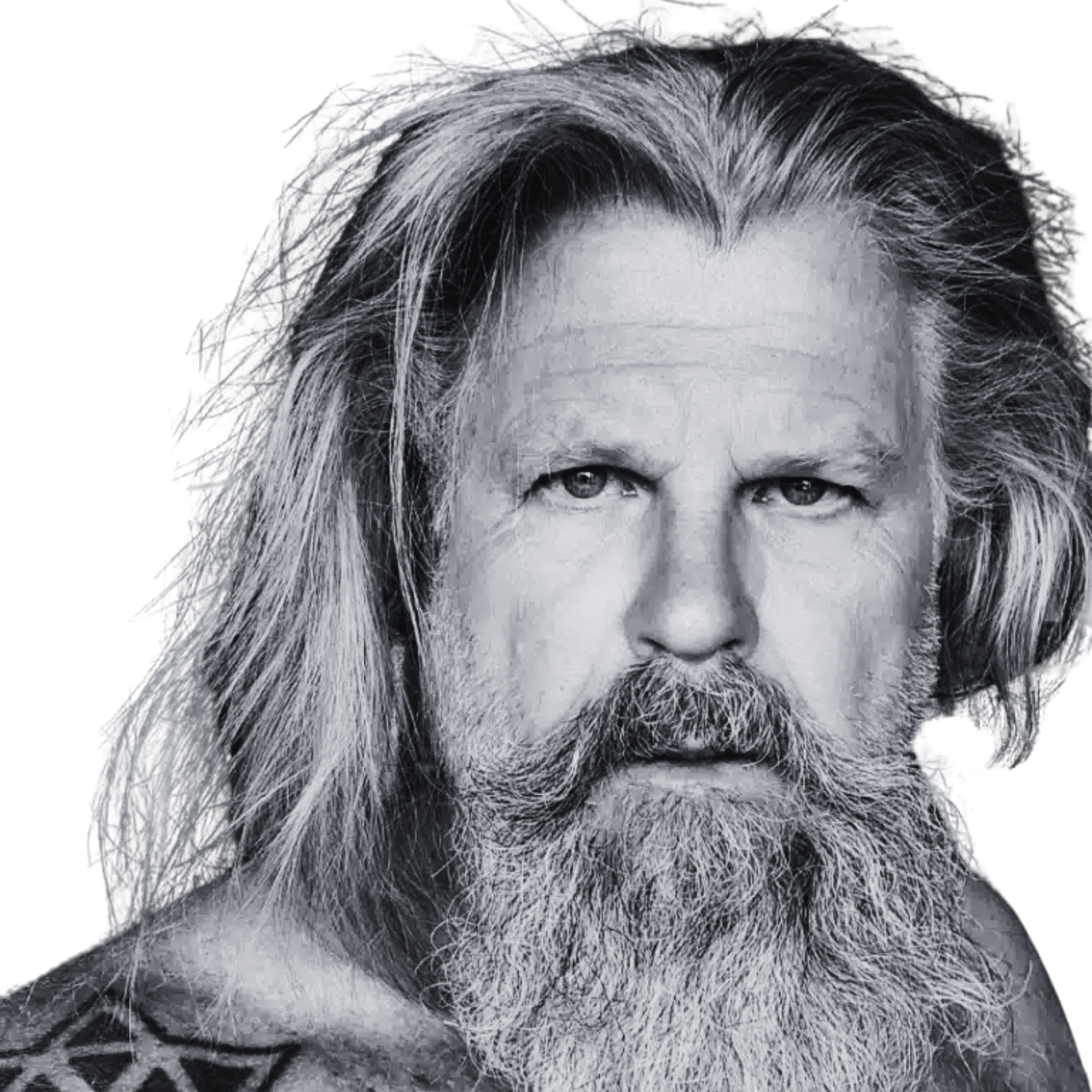
For about a week, I tried and tried. For 12 hours a day, trying to get my plans going wouldn't happen. Could not do it. formulated this is part of walking by the spirit when you get the shutdown when you get the shutdown you don't force it you you surrender so i surrendered and i found myself involved in what became a 1200 hour over the course of those three months work of studying people known as christian mystics Now, you can see right now I'm dressed in a very weird way, aren't I? That shouldn't surprise you, a man who's tattooed his face with the name of Yehovah.
This should be nothing. But it's part of Sean the Baptist, and it's part of what I am about. And I walk in it fully because that's how I want and feel I'm led. But the Christian mystics. Now, I have a question for you to ask yourself. Have you ever heard of Christian mysticism? Has that ever come across to you? Now, it came across to me in a couple names.
You recognize a few names, but barely. So over those 1,200 hours, I did research and compilation work on about 400 mystics, Christian mystics that lived from the time of John the Baptist and then Paul, both Christian mystics. on out through the course of Christian history up till 1961. And I compiled their biographies and tried to convey the things that they experienced directly with God. Going way back.
And the things I discovered in studying them were numerous, and we'll include those as we go through. It's kind of going to be our manual to talk about these different mystics. But you might say, first of all, that scares me. I'm afraid of that. And I have to be honest, I was afraid of the word mysticism.
Why? Why are we afraid of it? Well, we've been made to be afraid of it, especially if you cut your teeth in religion. especially evangelicalism. Because in our minds, we automatically equate mysticism with what? The occult, don't we? And we say, the occult, no. And that's true. I'd be very careful with the occult.
But they're two very different things. Christian mysticism and esoteric, hermeneutic... Freemasonry, tools to conjure up spirits to get power, the law of attraction, all those things are a very different body of work than Christian mysticism. What the Christian mystics, we will discover, almost all of them who are Christian mystics, what happens to them? They are either born with or they have a personal experience that radically changes them.
From the 1st century, 2nd, 5th, 10th, 15th, 12th, 19th, 18th, they have a radical experience. And in Christian mysticism, it almost always boils down to what? More humility. More humility. More desire to serve God and not man. Probably 98% of them. said, you don't need religion. You don't need the church.
Well, guess what the church did? Catholics, Orthodoxy, Protestants, guess what they did with the mystics? They maligned them. They made them suffer. They put them to death. They buried their insights. Or the Catholic church was really good at this and so was Orthodoxy. They brought them up and they beautified them and made them saints. Catholic saints, these mystics.
St. Francis of Assisi is one of them. If they clung close enough to the doctrine and the institution, they were accepted, but they were challenged. But the ones who said the church is a lie, you don't need, there's no intermediary, they killed them. And that's why you've never heard of most of the names that we're going to bring forward from this book.
Because they've been crushed and put underfoot. We believe, I believe, that the mystics serve as a better resource of people who have followed Christ in spirit and truth to look and study and see what they were about than people who clung to religion. The heroes of Catholicism and Mormonism and Protestantism, you know, cling to them. No, no, they played the game.
They weren't out because the fruit of Christian mysticism is always, Christian mysticism, humility. Less of themselves. More of God. More direct seeking of him. And honestly, devotion to the poor, the outcast, the broken, the needy, the sick. This is always the fruit of a true Christian mystic, as proven by the study I did.
You can get the book. If you can't afford it, tell us. We'll email it to you. It's a PDF now. It's on our list of books. And it's called On the Shoulders of Our Christian Mystics. On the Shoulders of Our Christian Mystics, I think. But it's a compilation of my findings for those 1,200 hours. I see them as saints.
I see them as people who often died for the faith, suffered immeasurably for the faith. But there's a lot of things to understand about them, things that we can learn, and things that should be cautionary tales. Because just because they were mystically inclined does not mean that they were always right.
They were often wrong. And it doesn't mean that we have to, in the bondage of practicing Christian mysticism, embrace what they embraced. In many cases I've seen, they were in bondage. And they couldn't just walk by faith and the relaxation of trusting that Christ was leading and live a normal life. They had to do a number of things to keep that going and to make it live in them.
There's a caution there. So we have to take them with caution too. But they really represent something that's beautiful if you take it as a whole. Now, I want to talk quickly about the difference between esotericism, hermeticism, alchemy, Freemasonry. magical incantations, the law of attraction, and all of those things that men and women have taken.
And what they've said is, we are mystically inclined too, but we are going to look at these sources to give us power, to make us stronger, to make us better. The Christian mystics, they also often had bad health. They often died very early. They suffered extremely.
Very big difference than going to and using tools from a dark force that will empower you here to get wealth and money and esteem versus going to the spirit and letting God lead you according to how you're built and made and to let that lead you. The fruit are very different things. Ultimately, we're going to get to the point where we're going to look at how those things converged and merged in a guy named Joseph Smith.
who was certainly a mystic and an occultist. What was the difference between all that? We'll talk about that when we get to it. It never leads to pride, Christian mysticism, as I said, but humility. And it always leads to Yeshua as the focus, the central foundation of the faith. That's a litmus test you use when you study and read them.
But there are exceptions. You can read how some start to go off. And the interesting thing I found is that if you want to really look at the difference between esoteric practices and Christian mysticism, is esoteric practices, hermeticism, Freemasonry, all of those other isms and ists and whatever, we'll cover them as we go.
they will slowly or majorly distance themselves from Christ. They might orbit just a little bit outside of it. They might orbit way outside of it. There's a spectrum of that, but they will always depart from Christ. How in Christ? They depart from him coming and being incarnate. They depart from him dying for us and shedding his blood.
And they depart from him as being God. Almost all of them. They will depart from that. And then what happens is they produce the fruit of not being focused on Christ, which is pride and which is money and the things of the world. Christian mysticism clings to him. But the interesting thing about that is that We will discover that the people we are influenced by the culture and things we've been taught and it comes out in the mystical practices even as Christians that we experience.
So you will be able to see and hear that someone who was taught about the Trinity will have mystical experiences that orbit around the Trinity. When you have a church that teaches you Mariology, that means the adoration of Mary, the Mother Mary, the mystics will have an interaction with Mary. They'll see Mary. She'll guide them.
And you find that in Catholicism and you find it in Orthodoxy because Mary's taught. But when it comes to Protestantism, there's no Mariology in the mystics. She's removed from the mystical experience that the people have. When it comes to the mystical Mormons, they have a mystical experience that includes their family.
And their family and seeing their family and being engaged with their family forever and ever and all this stuff, they were taught that. So it teaches us that the things that we are taught, if it's not in spirit and truth, will affect the way that even our mystical minds will interpret. And it will affect the way that we see God.
And that's proven by the way that the mystics come about. Now, just as a preliminary and throw it out there, what happens with the esotericists who always start to leave the orbit of Christ alone is they develop this thing, and it's known throughout all of their circles, and there's many expressions of them, as the Christ consciousness.
And what they say is, oh, yes, Christ. And they'll say he's the great prophet. They'll say he is the inspired one. They'll say that he is everything. And in fact, they'll say that the consciousness of Christ is what's in the world today. That's probably true. I don't have a problem with that. But here's where they differ. Here's the esoteric.
Remember they leave Christ? They will say, but there was no way he was a man that was God with us. In fact, they say he was, as a man, influenced by Christ consciousness. That he embodied Hinduism. And he embodied all these other isms and iss and the spirit of them. And he rose up as like an ascended master of them as a man.
But they'll say, but forget about that blood atonement stuff. And they call it Christ consciousness. And it's in the world today, big time, big time. It's a growing thing. Don't ever think I preach Christ consciousness. I do believe that because Christ had the victory over sin, death, hell, Satan, and that he walks as the victor and God has been reconciled to the world, that the idea of a Christ consciousness exists in this world.
But it began with him, it was created by him, and it came about because he was God with us who died for us, shed his blood, rose on the third day. If you get away from that, you're moving into the realms of esoterica, and you're moving away from the realms of what the Bible clearly teaches. And when you do that, what happens is the fruit you start to produce in your life is outside of the fruit that is produced when you follow him alone, which is humility, faith, kindness, meekness. All that's lost, you see.
Here's the interesting thing, and it's leading into what we're coming into on Heart of the Matter this week, and for the rest of the time we do it. Smith, Joseph Smith, the founder of Mormonism, he included the incarnation. Even though he was a mystic, an esotericist, a freemason, an alchemist in some sense, a hermeticist.
He included the shed blood. And that is, now he did deviate from him in saying he was created. and that he was the son of the Father eternally, but never God himself until he went through the process. That's where he deviates. But it's very subtle, but it's in the foundation of Smith's idea about Christ. Is it different? Yes.
Does it make a big difference to who he was theologically? It does. But just know, when it comes to the incarnation, the shed blood, the atonement for sin. Smith kept that. And so he bridges the world. And this is why Mormonism is so close in so many ways, not in the law and the prophets and the temples and all that. That's a different thing to talk about.
But he's so close that he doesn't just go the radical Christ consciousness way and say, no, no, no, you know, Jesus was this. He was taking the biblical model of Christ. He diminished him by his imagination on his ontology and where he started from. And that is what causes the LDS to be slightly off the mark in their walking in faith in Christ. When that can be corrected, that will bridge the stuff that he was teaching and help the LDS see where they were off a little bit.
Because you know when you go off course just one degree, When you travel one degree for 10 years, you're off a lot of degrees at the end of that journey, right? One degree was all it took. And that's where the mistake was made or on purpose. I don't know. So why pursue Christian mysticism, Sean? I mean, we have the Bible. Why even look at it? And what does it do for you? And how does it help? The ones who I study are...
when true, by their fruit, are a much better example to us of how to pursue Him, how to think, how to walk over the devotees of organized religion for the past 2,000 years. Hands down. Hands down. So there might be something to becoming a mystic in your own right. That does not need to reflect another person's journey.
You have, as an individual, the way God works through you. Don't be afraid to relate to him mystically because the church has shut that down. The simple reason is when you can relate to him directly, you have no need for them. And that was every mystic's argument. I can go and sit in the woods and read my Bible and know more about God than going to church.
And they hate that. So they've crushed that. And this stuff is simmering into my mind. I'm starting to see how it has all worked now in a much more detailed way. Got to be cautious, though. And the observations and discoveries off the top of my head is that mysticism evolves culturally. That it starts in a general area like you'll see mystics in France pop up.
And in France, it will grow and grow and grow. Every now and then, another mystic in another part of the world will come into that and that will grow in those areas. Then it will fade. And trends, there's trends with mystics. Makes me think it's very much part of the human experience that we filter in what God says through the mystical experience that we have.
And we have to adjust in how it works. You can see it happen within religious groups. There's different types of, and I mentioned that. religious experience, and we're going to talk about that. Most importantly, we have to ask, where does it all originate? You know, because the natural idea is it's all coming from God.
Everything that a mystic experiences comes from God. That's the way we naturally think. They're talking about God. They say God is telling them. So we say it came from God. I tend to think there's a better answer for that, and we'll discover that, and how you can test and try things, but just know, frankly, to me, from what I've learned and experienced myself, God gives truth to man.
We filter it through our own human brains, and we usually make a mess of it in the interpretation. And then it takes seekers to deal with those messes until they become more clarified and fixed in the end. We can see that happening through the law. When God gave the nation of Israel the law, it came in from him, yes, through Moses to man.
But we saw what they did with it. And so we saw what became of that through men's minds and their emotions and cultures and ways. By the time Christ came, we had them misinterpreting the law completely. And that Christ came and said, you don't even understand what it was for and why it was there. Anytime we get something from God, it's being filtered through our own mind, will, and emotion, our own heart, our own experience.
And so you got to be very careful not to look at a mystic and say, I'm following them. That's a problem. But we can give thumbs up to people who have their own mystical experience with God. And they walk in that. They're not trying to recruit you to do the same thing. And you allow that to happen to build you up and develop you in your direct subjective relationship with him instead of going to a church and practicing the rituals and rites that have been standardized by the collective group mind think of religious institutions.
This stuff is nuanced, but it's so valuable if we can start to look at it this way in the subjective walk with Christ. But where does it originate? I maintain that it comes from the spirit of man in most senses, that it comes from our emotionalism, it comes from our ideas of what we need in our specific life, but it can be used as a tool to help you.
So I'm suggesting we open ourselves up to the possibilities of relating to God more mystically as individuals. If someone comes to you and says, this is what you need to do to know God, be very careful. Because he relates to you directly. How do I know that? Because I've tested that in my own life. To walk solely by faith, trust not one thing that men or women tell me, and just put it to him and say, Father, you have to do this for me.
If you allow that, he will do it in his way with you. The way he did it with me may not be even close to what he does with you. And in that way, we are giving another thumbs up to the subjective religious experience over the collective, which says this is what you must do. Do the Hail Mary, go to the sacrament, confess to your bishop.
These rote things are God's will coming through men who make religion. And so we'll explore those things and talk about those things as we go on through the rest of this year. And then you have to look at the fruit of what a mystic will claim. And you have to look at their life subjectively and then look at it in your life.
You have to look at the flesh involved. There are mystics who apparently attested and tried, who experienced something called stigmata. That's where they have the wounds of Christ in their hands on the side and in their feet come out out of nowhere and start bleeding How where does that come from? Do you believe it? I don't know That happened.
Does everybody have to have stigmata? Why do only the Catholics and the Orthodox have stigmata and maybe some Anglicans, but the Protestants don't have stigmata? Are the Protestants less or have they evolved and learned something better? There are people who they say they experience by location. A woman is sitting there in her hut in 1252, and she's a mystic, and she's talking to the neighbors from something called her Anchorus Fortress.
And then she's seen in town talking to a group of other people. It's held by location. Is that possible? Is it evil? Is it of the dark? I don't know. I don't have answers for that. But what I do know is they've tested a lot of things. There was a woman, just to give you an example, she ate only the elements of the Catholic sacrament.
That's all she ate. She ate a sip of wine and the wafer, or whatever it was in that time. And the doctors and witnesses and people came in around her and they said, we don't believe it. We think you're sneaking food. And they did an entire scientific study. And by the way, the women, a lot of women mystics.
And so what the church has said is that's because they're emotional. You know, they get caught up in ecstasy. You can't trust a woman. She's in her time, you know. And so they would take the women and they would misogynistically treat some very sensitive traits. And these women would go from wealth to denying all wealth, living in austerity and giving their life to serving the poor.
I mean, that's pretty big dedication to someone who's faking it, right? You look at the fruit. But that's something else we have to look at. And the signs, and anyway, they did a medical test and they had witnesses. She was guarded. She went for a lot. I don't know. I can't remember. I think it was two weeks to test her.
She entered in at one weight. She exited the exact same weight. How? Is it real? Again, we want to say, oh, that's of the devil, especially evangelicals. That's of the devil. And maybe it is. Is it of the dark? What's the fruit of it? We want to talk about that. And we're going to use our manual to do it. So go and look at standing on the shoulders of our Christian mystics.
And we're going to use that kind of as an outline. And the very first one we're going to talk about is John the Baptist. And we're going to talk about how he was mystically inclined and give the evidence. And then we're going to talk about a guy that we all follow. His name was Paul. Think about the mystical experiences that Paul talked about in the scripture.
I mean, if an evangelical comes out and says one of those happened to them, oh, no, no, no. That's of the devil, right? Because we've been cautioned to believe that. And yet if the fruit leads to more dedication, how do we say that? These questions, I have just questions. And to talk about it, to introduce this as the new and better way for us to look backward in Christian history and develop some sensitivities rather than to pick the devoted Mormons or Catholics or whoever heroes of the faith and hold them up and sing praise to
the man. Let's do something different. But this is why give this direction in Sunday school instead of going through the scripture. Well, one, we've studied and continue to study the scripture. And we've done that. And that's there for you if you want to hear our insights. But you should be doing it yourself if you care.
If you don't, don't. But the scripture is a personal thing. and the Spirit is going to move you and introduce you where you're at in the Scripture. Churches will say, this is where you should be. Believe this. We say, if you're young in the faith, you'll be led this way. If you're more mature, the Scripture will lead you here.
As you advance, the Scripture will teach you deeper meaning and the mysteries that God wants us to seek. But we've done the Scripture, and while I love teaching it, And as part of my very essence as a human and as a believer, we're not going to do that. We want to keep going and build on what possibly can help us.
We walk by the spirit. We don't walk by the letter. When we can get people to understand that, we're going to make big changes in what the evangelical mindset is and what many of the collective churches have said. We seek him, him in spirit. and truth. It's his spirit. And what does his spirit bring? All the fruit of the spirit. That's simply it.
And if you see the fruit of the spirit in your own life, when someone does something to you and you're able to forgive them quickly and get over it, that's him. When you're able to be patient with someone who's making you impatient. When you show mercy on someone who deserves judgment and punishment and wrath and anger and hatred.
And there's people who do. You know, in this world, justly deserve those things. But when you show them mercy, that's the fruit of the Spirit. And He's working on us in those ways. And so we're going to emphasize how you walk and learn and grow by His Spirit. And learn to trust and lean on His Spirit. Not that we don't use the scripture.
It's the foundation. But the spirit is what makes us grow in all things. And it is the spirit of our Father, who today I proudly proclaim is my Father. And his name is Yeshua of Nazareth. Yeshua is my Father. To see him is to see the Father. To see Yeshua is to see the Father. For they are one. And he is with his bride.
They are the parents of everybody who has come into this earth ever since. They are the parents of the whole world population. And because of his victory and the bride's allegiance to him alone, they are the parents of the world's population ever since 70 AD or 134, somewhere in there. And we are all born with the spirit of Christ.
Every single person has the spirit of Christ in them because... He is their father. He's my father and yours. You are his daughter. I am his son. But we choose to follow him or we don't. I call him my father now. And it was a mystical experience that I came to understand him as that. And it's changed me as a man ever since, incomparably to what I was before.
So, and we learn of him. And why? Because he walked this on our behalf. And he learned what it meant to be, he learned obedience through the things he suffered. And so he leads us through suffering. And he teaches us how to manage the personal suffering we all have in one way or another. The suffering I've had has been immense.
Why? Because I'm the worst of the worst. And it was going to take a long, long, long, protracted course of him and his spirit leading me, leading me, bringing me nights of darkness. And this is possible in your life. And you're going to want to forget it. You're going to want to go back to the religion and think it's all just this.
But our father loves us and he disciplines those he loves. His children submit to that discipline and they look to him in spirit and truth and trust him as their guide. We mature. And that is something essential to being a child of our father and the bride is that as children, we're not the body. We are the bride.
We are the children of the bride and the groom. And we walk in the spirit of them. It's him, really. And we, because that's what they did. The bride followed the spirit of Christ. He's in us. And we follow that, right? And we mature. And we grow. And it starts with humility. And it continues with mercy. And then it grows into light and learning and love.
and more and more liberty from the specific things that you are captive to and that I've been captive to my whole life. I'll just give you an insight. My whole life from the time I had older siblings who taught me about music, I have loved worldly music. Cut my teeth on it. Could not get away from it. Listened to it constantly. Did all my art by it.
After I had my mystical experience in this past four months, I haven't listened to one single thing. It's not that I think it's wrong. I'm beyond it. He took it from me. Took it. I only listened to the word of my daughter set to music. That's the first secular song I've ever listened to. A morning is broken in the past four months.
This is a miracle in my life. Not that it's bad. My father didn't beat me up for listening and loving that. But it was part of it. I've always loved women. I've always looked at them lecherously. I've always loved porn. I struggled with it up until four months ago. Haven't even wanted, desired to look at it ever since.
He came in and showed me who I was and who he is. And I experienced, and we'll talk in depth about this, what James described when he said, remember? Blessed is the man, woman, who endures temptation, trials, endures them. For when they have been approved. Approved. For when you've been approved of going through.
How? By overcoming them through your flesh and religion? No. By making yourself perfect? No. When they have been approved. How? By faith. By trusting in your maker to lead you through the wilderness and not to idols, when they have been approved, they will receive the crown of life, which the Lord has promised to those who love him.
I received it. Peter said that the day star will rise in your hearts. Has the day star risen in your heart? Can it? Well, I don't know about you, and I don't know what God will give you, but it has in me. And it's altered me from the man you've seen before you, ranting, raving, screaming, fighting, yelling.
It's changed me. Am I over my flesh? No. As long as we're in the flesh, we'll battle it. But the things that once beset me that I was open about throughout the course of this 20-year online ministry, gone. Gone. I stopped using THC. I haven't used it.
Well, now, because I made the decision to stop it before we did Sean the Baptist, because I don't see anything wrong with it. It's something that's wonderful to relax by. It's not sinful to me in my life. If you can't handle it, don't do it. But he said, you don't need that. Been done for about coming up on three weeks. None. It goes. And I'm just telling you from my own personal experience that you, if you've been with us and have watched, this stuff is possible.
And you don't do it through guilt and shame and the corrections of men and their religion and their confessions and their communications. You do it through faith on your father. And you ask him to lead and guide you. And he hears you and he knows when the right time is. In your specific life. Your subjective experience.
To give you what you need. That I can testify to you. So we take the written concepts. We apply them principally. I've tested it all. You can believe me. You can deny me. It doesn't matter. It's because it's not your walk. It's mine. But I've lived it. And I've experienced it. The fruit of my father is now being born in my own life.
And it's been insanely beautiful. What will unfold along the way may help you experience more and more of the same. And it might enhance your walk. It might take you from being a legalist of the scripture. Chapter, verse, chapter, verse. I must do, I must do, I must do, I have to. Because that's what I was part of.
I experienced that. To complete liberty. In him. All of it's built on him. All of it comes from him. He's the author and finisher, the alpha and the omega, the father of our faith, Yeshua, the risen victorious Lord. That's what I claim. All of this plus much, much more is going to come forth.
If you are part of the ministry in your heart, if you like what we do or where we've been, you're going to want to watch this coming Tuesday night on Heart of the Matter. We're going to tentatively title it, My Brothers and Sisters. And we are coming to talk directly to the leadership. And we're going to talk directly to the members about the things that we've discovered over the course of these investigations and trials.
And it's going to be in the spirit of love. It's going to be in the spirit of my father. And we're going to give an explanation of why we think God used and allowed. Brother Joseph Smith, because I call everybody my brother and sister now. Sister Mother Teresa, you know, Brother Muhammad, Sister Ellen G. White, because we are.
Post Christ and his victory, we are brothers and sisters. And in different levels of maturity. And so the LDS are our brothers and sisters. So are the Catholics and the Hindus and the Muslims. And I just implore you to seek him in spirit and truth. Get ready in our Sunday school now to start asking questions.
And the format is going to be open. And it'll be a, what do you think? Oh, we got an email here. Maybe we'll get a call. Our audience is small. And that's another thing. My father told me everything's going to start real small. And it did. Yesterday in our first Sean the Baptist in Logan, Utah, we had three people show up.
But powerful, powerful expressions of things that are in the works. And we think that's going to grow. This has started small. We have four people sitting in this audience. I don't know how many people are going to watch, but it's going to grow. I am going to say in the name of my father, you're going to watch it grow.
And as it does, you're going to see things happen at his hand and by his power, not through social media, through him. And that's why we've pulled back from social media. We're putting it in the hands of our Father and in the fruit of the Spirit. All right, any comments or questions on this first introduction to Sunday school? Is everybody ready to run to the hills? Nothing.
Thanks, brother. So much has yet to be fulfilled to keep people coming to church. Yeah. Yeah. Amen. Oh.
He's a rare Christian mystic. Yeah. Sure. Just to let you know, I've watched Danny. I've known Danny for years, and I watched him come out of the church, sort of. I don't know when he came out, but I met him. He was searching, and he was reading Bart Ehrman, and he was searching and looking and came up to the school, and then I've watched him just try to keep going.
And I've watched him take the word seriously. But he also reads other things. And he's open, like reading Tozer. Well, we're going to introduce you to another 400 people to consider to read and the stuff they say. And Danny, when he came up today, he said he'd just been traveling. And he just went along the Oregon coast and down and all these redwoods and how beautiful.
And that's something that the mystics nature. Nature is just God's wonderful hand to show us his love and care. We need to see more of that in ourselves and not just be indifferent to it all. It opens us up to other people, God's hand. Thanks, Danny. Yes, Sister Alicia. From the five of us, six of us, seven of us, praise him, right? Thanks, Alicia. The square.
Brent. Praise God, Brent. Thank you. And Delaney and I and Danny just mentioned how people are coming aware and awake of this. That's what's unfolding in people who seek him.
It's more and more. And interdenominationally, it's opening people up. We're starting to get there. And I think it's a beautiful time. Going to be a tough time, but it's a beautiful time. Delaney. Oh. We're going to, Delaney's telling me we're going to get the emails and phones set up for next week, and you can call in.
We're going to work that out. Technically, you know, she bears it all, so it takes some work to get this stuff. It's not simple, but we're going to try to set that up for you at home. We think that's going to grow. Alicia just said she sees what's going on here as something that's going to grow, almost like she was offering a prophetic statement.
And to us, and so I'll take that. Why not? Maybe not prophetic in the way that they use prophets, but maybe of the spirit. Brent shared that he has, through his father, relied on him, who's helped him personally experience overcoming certain things that he's struggled with. That's what this is about. And I appreciate the honesty.
We're all in the same boat. Margo. Satan. And they're pretty diabolical experiences. They're scary. I certainly wouldn't want that.
And I'm listening and wondering about it and especially wondering, because these are people who are devoted to God. So how are they coming to have those experiences? It's like, is it as simple as if I believe in a Satan, that's what I'm going to get? Well, that's what you name the thing, because that's what you've been taught.
Yeah. Yeah. My encounter is with... Yeah. Yeah. Isn't it interesting because within Protestantism and really in Catholicism, they look at that spiritual warfare with demons and Satan and all that. They really focus on that struggle and that battle and that war. As I understand scripture, again, this interpretation like you're saying, but as I understand scripture, he's been, you know, overcome by Christ's atonement.
He doesn't have any power over us. He had power over them then, but not over us. And so, I don't know about you guys, but for me, I don't ever feel like I'm being tested by Satan or being, you know... you know, struggling with that. So it's just kind of like Sean was saying, for some people, that's their reality or their perception, and that's what they live in. And for others, there isn't any.
So it's interesting in the mind how we create those sort of... I'm sorry for the audience who watches. You can't hear because we don't have our mics up. Margot talked about how interested she is in seeing what we learn from the mystics, but the mind and how the mind plays a role in this and how so many people she's reading about are having these experiences with Satan, very powerful experiences. And then Danny pointed out that biblically speaking,
Satan has been, his power is destroyed, but does that mean that the dark is not there? Yeah, I agree with the dark too. So we'll talk about that. The naming that comes with the way we've been taught versus the reality of what it probably really is. And the dark is so real. And that's what Alicia just said is she knows the dark.
And I can attest the dark is as real as... has anything else it is real and it's in this world and it's powerful so all that we keep working through and try to stay away from dogma and and misappropriation of the scripture but use the scripture and it's a fun journey and we should be of hope and joy as we go through and learn so we'll end with that i'm gonna unless there's anything more i'm gonna end with a prayer and uh So grateful for you guys being here.
And just remember, this coming Saturday or Tuesday night, 8 p.m. Mountain, we're going to address the LDS Church from a perspective that I believe my father has given to me. And you can just see if it holds water for you. Coming up Saturday of this coming week, we're going to be at Weber State Area. Go to SeanTheBaptist.com to find out the exact location.
Show up there, and you can join in for just one hour of a thing that we're doing to help unify all people of faith, not in doctrine, not in practice, not in doctrine and practice, but in mercy. Let's pray. Father, we're so grateful, and we just seek you. We pray that you will help us understand your purposes in allowing the dark because all things have been put under your feet and allowing the trials that we all experience to grow us.
Help us to learn to listen to you directly and you alone, Father, not to the thousand voices in our head or on our laptops, not to all the media, but to you and to make you preeminent, primary. No idols, Father. That we love life, we have it more abundantly, that we're in liberty, but we do not turn to idols and we pray that we will be a people who follow that from our heart.
We love you and seek you. Pray for those who are struggling and need you, which are everywhere. And we pray that you'll prepare us for the coming years and the difficulties that seem to be unfolding upon us. In Yeshua's holy name, amen. All right.