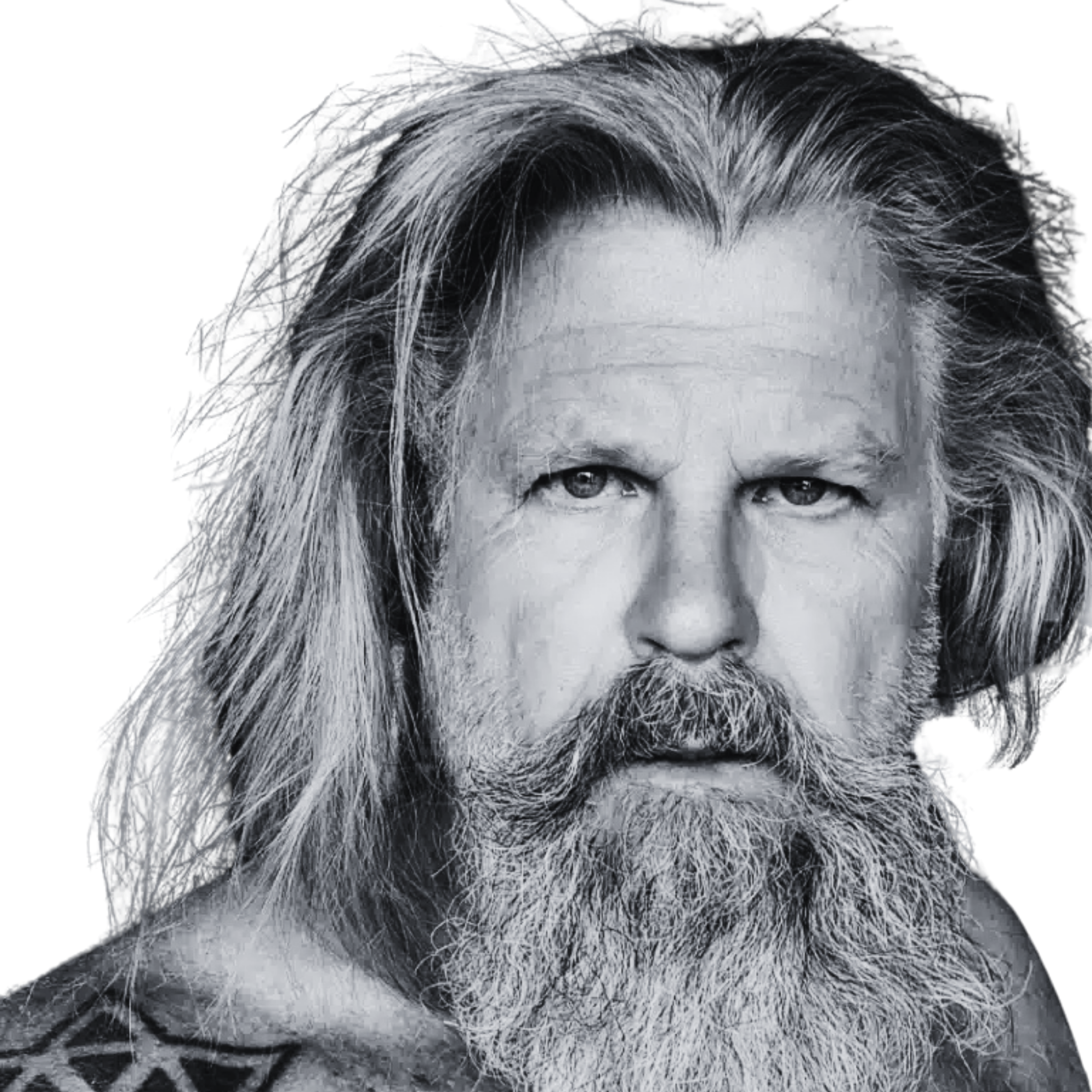
AI-generated summary
Central Claim: John the Baptist represents the pinnacle of Old Testament devotion and Law-keeping—the "greatest born of woman"—yet paradoxically, even the least in Christ's kingdom exceeds him. This illustrates the Yeshuan theology that subjective faith in Christ surpasses objective adherence to religious law and external righteousness.
Biblical Basis: Matthew 3:1-10 (John's proclamation and ascetic lifestyle); Matthew 11:11 (Christ's paradoxical statement about John's greatness); Isaiah 40:1-8 (John as fulfillment of wilderness voice prophecy); Numbers 6 (Nazarite vow specifications).
Key Theological Point: John embodied complete consecration—priestly descent, lifelong Nazarite vow, prophetic clothing/diet mirroring Elijah, radical separation from worldly luxury—yet remained under Law. The teaching emphasizes that Christ's kingdom operates on a different principle: *internal faith and spirit-indwelling* supersede *external works and ceremonial perfection*. This reflects Yeshuan fulfilled eschatology: the kingdom is present through subjective faith-relationship with Christ, not achieved through Law-obedience or ritualistic performance, no matter how devoted.
Read Transcript
Welcome
February 8th 2026 Matthew 3
Matthew 3.1-10
February 8th 2026
Verse 1-12, which will take up our time today.
In those days came John the Baptist, preaching in the wilderness of Judaea and saying, 2Repent, for the kingdom of heaven is at hand. 3For this is he who was spoken of by the prophet Isaiah who said, The voice of one crying in the wilderness: Prepare you the way of YAHAVAH, make his paths straight. 4And John wore camel's hair and a leathern girdle around his waist; and his food was locusts and wild honey.
Okay, verse one says, “In those days . . .”
The previous chapter leaves us off with Christ as a young child in Nazareth so obviously Matthew makes a jump in time here without an explanation and it seems that perhaps he is saying, “and in those days while Yeshua was still living in Nazareth as a man,” what happened?
“In those days came John the Baptist, preaching in the wilderness of Judaea.”
Because of their closeness in age (John was about six months older than Yeshua) it is unlikely that John was preach very long before Christ entered into his ministry.
The word preaching simply means proclaiming, announcing in this place and what do we know he was proclaiming? Matthew cites his message as,
“Repent, for the Kingdom of heaven is at hand.”
Having cited Isaiah’s prophecy and assigning it to John (which says)
Isaiah 40:1-8 says in full,
1 Comfort ye, comfort ye my people, saith your God.
2 Speak ye comfortably to Jerusalem, and cry unto her, that her warfare is accomplished, that her iniquity is pardoned: for she hath received of YAHAVAH'S hand double for all her sins.
3 The voice of him that crieth in the wilderness, Prepare ye the way of YAHAVAH, make straight in the desert a highway for our God.
4 Every valley shall be exalted, and every mountain and hill shall be made low: and the crooked shall be made straight, and the rough places plain:
5 And the glory of YAHAVAH shall be revealed, and all flesh shall see it together: for the mouth of YAHAVAH hath spoken it.
6 The voice said, Cry. And he said, What shall I cry? All flesh is grass, and all the goodliness thereof is as the flower of the field:
7 The grass withereth, the flower fadeth: because the spirit of YAHAVAH bloweth upon it: surely the people is grass.
8 The grass withereth, the flower fadeth: but the word of our God shall stand for ever.
These are very prophetic utterances not only of the voice in the wilderness, but also of the promised Messiah to come, the Word of God with stands forever.
But why the wilderness? To answer this, we need to try and see the overall arch of what God was doing in and through John as Matthew adds at verse 4:
4And John wore camel's hair and a leathern girdle around his waist; and his food was locusts and wild honey.
What else do we know about John the Baptist?
All we really have in the Gospels are imperfect fragmentary accounts.
First, he was of priestly descent as his father, Zacharias, was a priest of the course of Abia according to 1st Chronicles 24:10 and his mother, Elisabeth, was of the daughters of Aaron (according to Luke 1:5).
Of course, prior to his birth John’s mission was laid out first in Isaiah and second in Malachi. Additionally, his mission was announced to his father by an angel.
While in utero, the scripture says that John was filled with the Holy Spirit even to the point of leaping in his mother’s womb when Mary the mother of Christ entered the room.
His father lost the power of speech due to his incredulity over what the angel said and after this information nothing else is written about him until the Gospel accounts which say
According to Luke 1 he was a Nazarite from birth (Luke 1) which is the name or title an Israelites took on themselves (by making a vow) which is described in Numbers 6:2-21.
The word describes someone who is separated from others and consecrated to God and while there were no Nazarites before Samson it seems they existed before the time of Moses.
The vow of a Nazarite involved these three things,
(1) abstinence from wine and strong drink, (2) refraining from cutting the hair off the head during the whole period of the continuance of the vow, and
(3) the avoidance of contact with the dead.
When the vow taken ended the Nazarite had to present himself at the door of the sanctuary with
(1) a he lamb of the first year for a burnt-offering,
(2) a ewe lamb of the first year for a sin-offering, and
(3) a ram for a peace-offering.
After these sacrifices were offered by the priest, the Nazarite cut off his hair at the door and threw it into the fire under the peace-offering.
Interestingly and for some reason (which probably took place in the midst of his work at Corinth) the apostle Paul took on himself the Nazarite vow which could only be terminated by his going up to Jerusalem to offer up the hair which till then was to be left uncut.
But it seems to have been allowable for persons at a distance to cut the hair, which was then brought up to Jerusalem where the ceremony was completed. And this Paul did. But in Act 21:23-26 at the feast of Pentecost, Paul took on another Nazarite vow.
"The ceremonies involved took a longer time than Paul had at his disposal, but the law permitted a man to share the vow if he could find companions who had gone through the prescribed ceremonies, and who permitted him to join their company. This permission was commonly granted if the new comer paid all the fees required from the whole company (fee to the Levite for cutting the hair and fees for sacrifices), and finished the vow along with the others.
Four Jewish Christians were performing the vow, and would admit Paul to their company, provided he paid their expenses. Paul consented, paid the charges, and when the last seven days of the vow began, he went with them to live in the temple, giving the usual notice to the priests that he had joined in regular fashion, was a sharer with the four men, and that his vow would end with theirs.
Nazarites retired to the temple during the last period of seven days, because they could be secure while inside against any accidental defilement."
Everyone could choose the duration of their vow but there in mentioned in scripture only three souls who were Nazarites for life - Samson, Samuel, and John the Baptist.
John the Baptist wore garments of camel's hair with a leather belt and ate locusts and wild honey which appear to physically embody a prophetic, ascetic lifestyle, which specifically mimicked the prophet Elijah and to help signal his role in preparing the way for the Messiah.
His diet, clothing, homeland and hair symbolized repentance, total dependence on God, and a rejection of luxury.
The clothing (camel’s hair and leather belt) directly mirrors the description of the prophet Elijah in 2 Kings 1:8, and this helped identify him as the one who came in the Spirit of Elijah.
While rough, uncomfortable, and coarse clothing (similar to sackcloth) it all symbolized mourning and a call to others to repentance, and a turning back to God.
The religious leaders of His day, draped in fine clothes and living sumptuous lives off the backs of the people were a marked contrast to John’s appearance.
His reliance on God was taken to the point where he ate what God provided him in his rugged mountainous home – locusts – and wild honey and interestingly both items were technically allowed under Jewish dietary laws.
Bottom line – John the Baptist was a living, breathing full on embodiment of a soul that was dedicated to God and who refused to give an inch on anything man-made and of that world.
Later we will read about John having a crisis of faith and that he will send messengers to Yeshua to ensure he had the right guy and we read in Matthew 11:7
7 And as they departed, Jesus began to say unto the multitudes concerning John, What went ye out into the wilderness to see? A reed shaken with the wind?
8 But what went ye out for to see? A man clothed in soft raiment? behold, they that wear soft clothing are in kings' houses.
9 But what went ye out for to see? A prophet? yea, I say unto you, and more than a prophet.
10 For this is he, of whom it is written, Behold, I send my messenger before thy face, which shall prepare thy way before thee.
11 Verily I say unto you, Among them that are born of women there hath not risen a greater than John the Baptist: notwithstanding he that is least in the kingdom of heaven is greater than he.
12 And from the days of John the Baptist until now the kingdom of heaven suffereth violence, and the violent take it by force.
13 For all the prophets and the law prophesied until John.
14 And if ye will receive it, this is Elijah, which was for to come.
15 He that hath ears to hear, let him hear.
In due time, John came forth into public life, and great multitudes from "every quarter" attracted to him. In another symbolic act of John representing all that was wrong with the Nation in that day, we cannot help but note that John in preparing the way for the Messiah did not go to Jerusalem but preached outside of it, in the mountainous region near a source central to his mission – water.
We notice that they came out to him – he did not go to where there were. He was different than any other typical human as he had the Spirit of God indwelling before he was born, he was raised in an arid mountainous region, wore clothing opposite of the leaders, ate what they would never eat, and refused to be what others were. In summary, John the Baptist embodied a Jew under the Law of God whose heart was for righteousness.
Would he make us uncomfortable today? See John is not just his clothing, or hair or diet. What John was, and I am citing an observation I took from another believer named Chad Bird, and that is John the Baptist was uncivilized. I would add, utterly.
He was the kind of person we typically apologize for under our breath to others if not with words then with eyerolls.
Listen, seekers of the true and living God, John didn’t pay to play. He turned his back on all of that so much so that in Matthew 11:11 we read Yeshua actually say of him
Verily I say unto you, Among them that are born of women there hath not risen a greater than John the Baptist: notwithstanding he that is least in the kingdom of heaven is greater than he.
What does this mean and imply? How are we to understand this man of great devotion, possessing the spirit from the womb, living austerely in every way, removing himself from the riff-raff of false religion, soft living and dedicating himself fully to God as being inferior to EVERYONE in the Kingdom of Christ including the most inferior?
Listen closely – John was the greatest born of a woman under the Law but to abide in Christ by faith and in the liberty of His spirit the very least will be greater.
You see, John’s life and mission, while impressive in terms of devotion, did NOT embody nor understand the Spirit of Christ.
He was from birth full of the Holy Spirit of God and that fortified him to be materially resolute in his devotiions to all God said – what to eat, drink, touch, not touch, how to dress, where to live – it was an attitude that some of the most devoted to religion, culture, the military or cause are also able to possess.
They are sold out. They are tough. And none was more materially tough than John. And his material resistances to the religious culture of His day were a material witness against all that the Nation had become.
Truly, as Yeshua proclaimed, he was the greatest born of a woman.
But John, materially strong like Samson who was also a Nazarite from birth, was also weak in ways which will become apparent in the future, as was David who was a man after God’s own heart, like the Great Hezekial, and like Peter before the indwelling of Christ within him.
The point? John the Baptist represented as close to perfection under the law that a man could come. But that perfection does not compare to what the Spirit of Christ can bring about in the lives of the least in the Kingdom.
All this said, I am convinced that believers today would do well to face the chicanery of what religion has become and to adopt the spirit of John the baptist in response to it all because he spits in the face of flattery, deems himself unworthy even to touch the shoestrings of the Messiah with his sinful fingers.
Bottom line - John the Baptist is everything that “civilized Christians” avoid and reject. He was so radical that he refused to play along with anything men sought from him.
When the religious leaders come out to him they will ask him his identity this is what we read in the Gospel of John:
John 1:19 And this is the record of John, when the Jews sent priests and Levites from Jerusalem to ask him, Who art thou?
20 And he confessed, and denied not; but confessed, I am not the Christ.
21 And they asked him, What then? Art thou Elias? And he saith, I am not. Art thou that prophet? And he answered, No.
22 Then said they unto him, Who art thou? that we may give an answer to them that sent us. What sayest thou of thyself?
23 He said, I am the voice of one crying in the wilderness, Make straight the way of the Lord, as said the prophet Esaias.
24 And they which were sent were of the Pharisees.
25 And they asked him, and said unto him, Why baptizest thou then, if thou be not that Christ, nor Elias, neither that prophet?
26 John answered them, saying, I baptize with water: but there standeth one among you, whom ye know not;
27 He it is, who coming after me is preferred before me, whose shoe's latchet I am not worthy to unloose.
28 These things were done in Bethabara beyond Jordan, where John was baptizing.
John only cites scripture in answering them on his identity but the shows that from his mouth he was NOT claiming to be a reincarnation of Elijah but that, as Malachi said, he came in that same spirit.
And from that wilderness and from that devoted extreme uncivilized persona John beckoned all who sought truth away from all that was civilized allowing his follower to clearly leave father and mother, occupation and comfort of that culture and to come face to face with God in his true temple – nature.
John’s very person screams to any who would hear – “No more civilized sin.”
No more mother father brother sister, community of lies and deceptions of man. Come out from her, that Jerusalem, that evil – and for all with ears to hear to come out from her and do one thing –
“Repent” – why? “Because,” John said then, “the kingdom of heaven is at hand.”
There is a huge part of our flesh, our desire to be proper and be seen as accepted of God that hates the John the Baptists of the world.
Religious flesh wants soft robes, cushy lunches, brick and mortar campuses and to be seen as right beneath our suits and dresses of fig leaves.
John laid bare how comfortable that nation had become with mammon, how adept they were are judging and condemning, and how easily they sought to comfort themselves rather than to help the well being of others.
But John? He was “calling that Nation to repentance, that they might escape from the wrath that would fall on them as prophesied.
And as a sign of their submission to the act of repentance, he was baptizing them in water, burying them and lifting them up to a way that identified with humility, a washed-out exterior what fine living, diet, clothes and appearance is leveled.
Water baptism, or the application of water as a outward act of becoming an acolyte to Judaism which symbolized the washing away of paganism, was practices and done in ancient Israel, and John was doing it unto “repentance.”
Now, there are two words in the Apostolic Record translated repentance one describes a change of mind and/or the reformation of the life lived; the other signifies sorrow or regret for sins committed.
The word used here by John is the former; calling the Jews to a change their minds and therefore their lives in the face of such. This repentance and the act of water baptism to prove it, was a preparation for the coming promised Messiah and cannot be mixed or misapplied to non-Jews thereafter or in water baptisms today.
In other words, John’s water baptism was a completely different baptism than what disciples of Christ performed – forget this and you might leap to some conclusions that are not supported by the text.
So Matthew three Matthew writes that John came on the wilderness scene saying to those who came out to him –
“Repent because,” John said then, “the kingdom of heaven is at hand.”
Change your mind, prove it through baptism and prepare yourselves “because the Kingdom of Heaven is at hand.”
Again, and in the time of John, the nation had become extremely wicked and corrupt, perhaps more so than at any preceding period, and as a result of having the Law, the Prophets, and soon the promised Messiah given them, John came calling the Nation to repentance before the promised, “great and terrible day of the Lord.”
But again – and this is important this is not the order for the rest of the world (i.e., to repent and then have faith in preparation for a future great and terrible day of the Lord in our future.
That was the call to them in that day – period. The call on the gentile world, according to Paul was to believe, have faith and let that lead them to changing their minds.
But John’s message to his own brethren in that specific day was change your minds and put your faith in the arrival of the King in preparation for the great and dreadful day RATHER than believe and the indwelling of the Spirit will help you change your minds thereafter.”
The Tanakh ended with Malachi prophesying of the coming of Elijah before the great and dreadful day of YAHAVAH.
Then there was 400 years of silence.
The Gospel of Matthew opens up with John the Baptist preparing the way for the promised Messiah and in Matthew 11:14 Yeshua plainly says that John the Baptist was the fulfillment of the Malachi prophecy.
The great and dreadful day of YAHAVAH would be the day when Jerusalem would fall to the Roman armies and all that was important to the nation of Israel would be utterly destroyed along with their temple, genealogical records, priesthood and religious material empire.
When John says, for “the Kingdom of Heaven is at hand” this can be read to say just as directly, “the reign of God draws near.”
Many believe that this reign was and is materially based but Yeshua said, “the Kingdom of God is within you,” meaning it is a spiritual kingdom and not a material one.
At verse five Matthew adds,
5Then went out to him Jerusalem, and all Judaea, and all the region round about Jordan,
Jerusulem and all of Judea? Doubtful, but a great deal for sure because John attracted a large following and created numerous disciples but then verse 6 read -
“And were baptized of him in Jordan, confessing their sins.”
Let’s wrap our time up as the narrative further unfolds with Matthew adding at verse 7
7 But when he (John the Baptist) saw many of the Pharisees and Sadducees come to his baptism, he said unto them, O generation of vipers, who hath warned you to flee from the wrath to come?
My God how I love this man’s boldness, resolute devotion to God alone and to what He was called to do. So he says to these LEADERS of the religion of the day - “O generation of vipers, who hath warned you to flee from the wrath to come?”
“Translated, you offspring of venomous adders.”
Sorry, but that is my heart for anyone who abuses, misrepresents, controls the religious narrative of anyone on earth – no matter the denomination. They are venomous adders and I can say this because as LEADERS they should know the truth, should pursue the truth and teach the truth that LIBERATES and honors the Living God and His will and does not serve to BLESS THEM AND THEIR AGENDA.
John had the right to use this language because He was true and they were not. There was no need for kindness, mercy and unconditional love toward them because that is what the Spirit of Christ would bring to the heart of man and John was before this.
“you offspring of venomous adders. Bring forth therefore fruits meet for repentance: and think not to say within yourselves, We have Abraham to our father: for I say unto you, that God is able of these stones to raise up children unto Abraham.”
The central point John seems to be making is
“You have ridden in on the coat-tails of your lineage to Abraham but bear no fruit of him. Faith in truth is tied to fruit and your have none that show you have changed from your ways. In terms of your link to Abraham, God can make these rocks all around us children of Abraham.”
Then he timestamps his mission, his purpose, his intentions and the setting that was coming upon them since he has claimed that the Kingdom of Heaven was at hand and he says,
10 And now also the axe is laid unto the root of the trees: therefore every tree which bringeth not forth good fruit is hewn down, and cast into the fire.
These words are a direct continuation of Malachi’s prophecy about John given four hundred years earlier and put at the end of the Old Testament. These are what said in the last book of the Tanakh before 400 years of silence fell on the Nation:
First in chapter 3:1 Malachi prophesied saying,
Malachi 3:1 Behold, I will send my messenger, and he shall prepare the way before me: and the Lord, whom ye seek, shall suddenly come to his temple, even the messenger of the covenant, whom ye delight in: behold, he shall come, saith the LORD of hosts.
The last chapter of the last book of the Bible when Malachi says,
Malachi 4:1 For, behold, the day cometh, that shall burn as an oven; and all the proud, yea, and all that do wickedly, shall be stubble: and the day that cometh shall burn them up, saith the LORD of hosts, that it shall leave them neither root nor branch.
2 But unto you that fear my name shall the Sun of righteousness arise with healing in his wings; and ye shall go forth, and grow up as calves of the stall.
3 And ye shall tread down the wicked; for they shall be ashes under the soles of your feet in the day that I shall do this, saith the LORD of hosts.
4 Remember ye the law of Moses my servant, which I commanded unto him in Horeb for all Israel, with the statutes and judgments.
5 Behold, I will send you Elijah the prophet before the coming of the great and dreadful day of the LORD:
6 And he (John the Baptist) shall turn the heart of the fathers to the children, and the heart of the children to their fathers, lest I come and smite the earth with a curse.
I am not going to explain the meaning of the turning the hearts but suffice it to say,
had the Jews turned to God, and received the Messiah at the preaching of John the Baptist and that of Christ and his apostles, the awful final promised prophesied excoriation of them might not have occurred.
Instead, the Nation, like they were always inclined to do, “filled up the cup of their iniquity, rejected and killed the promised Messiah which opened His work up to the Gentiles forevermore.
In this way Yeshua’s words that the first would be last and the last would be first was fulfilled.
Malachi prophesied of three remarkable events in this last chapter – a) the advent of John Baptist who would come in the spirit and authority of Elijah, b) the manifestation of Christ in the flesh, referred to as the emblem of the Sun of righteousness and c) the final destruction of Jerusalem, represented under the emblems of a burning oven and roots and branches coming down which John directly references when he tells the Pharisees and Sadducees that the axe was laid at the root of the trees.
And then John explains his purpose plainly, saying at verses 11-12
11 I indeed baptize you with water unto repentance: but he that cometh after me is mightier than I, whose shoes I am not worthy to bear: he shall baptize you with the Holy Ghost, and with fire:
Of course this speaks of Yeshua a wholly and completely different being in purpose, power, ontology and holiness to John.
In that culture the footgear was to protect the bottom of the foot and straps of leather were used to attach them to the ankle and top. To loose and bind on sandals, on such occasions, was the business of the lowest servants; and their office was to loose and carry about their masters' sandals wherever they went.
John’s expression was one of great humility; and John says that he was not worthy to even be the servant of Him who should come after him.
Then he explains that while his job was merely water-related, materially symbolic of that material age and how it worked, the one who would come after him would be baptizing with something far more powerful, meaningful and altering
The scripture often describes the Spirit of God as being poured out upon people, (Proverbs 1:23; Isaiahs 44:3; Joel 2:28,29; Acts 2:17,18).
The baptism of the Holy Spirit is the same, therefore, as the sending of God influences to convert, purify, guide and empower the soul.
So where John came as a preparer, baptizing the Jews with water according to their ancient custom, John says that the Messiah that he came to prepare the way for would baptize with the Spirit and with fire.
We actually are going to stop here because next week we will dive into what this means to us today, why its very different from what it was then and how it serves God’s creations in the modern world.
See you then.